

Getting your child to communicate clearly can feel like a puzzle sometimes. You want to help them express themselves, but where do you even start? The good news is, you don’t need to be a speech expert to make a real difference. Many simple things you already do every day can actually help boost their speech skills. This article is all about those easy, practical ways to support your child’s talking right at home, making it a natural part of your family life.

It might seem like speech practice needs special, dedicated time, but honestly, you can weave it into what you’re already doing every single day. Think about it: your child is interacting with the world constantly, and each of those moments is a chance to build their communication skills. Making these everyday activities a bit more intentional can really make a difference.
Meal times are fantastic for conversation. Instead of just asking “Did you like your food?”, try asking more open-ended questions. “What was your favorite part of the carrots?” or “How did the soup taste today?” This encourages them to use more words and describe their experiences. You can also talk about the food itself, its color, texture, or where it came from. Bath time is another surprisingly good spot for language. Describe what you’re doing: “I’m washing your arm now,” or “This is the bubbly soap.” You can also name body parts or talk about the toys in the bath. It’s all about narrating the experience.
Story time is a classic for a reason. Beyond just reading the words, pause and ask your child what they think will happen next. Point to pictures and ask them to name objects or describe the scene. If they’re up for it, let them retell parts of the story in their own words. Chores, believe it or not, can be speech builders too. When you’re tidying up, explain what you’re doing: "We need to put the blocks back in the bin." Ask them to help and describe their actions. Even simple tasks like setting the table can involve naming the items: "Can you find the forks?"
Setting up little routines can make talking a natural part of your day. Maybe it’s a "high-five and tell me one thing" ritual when they get home from school, or a "what was the best part of your day?" chat before bed. These aren’t formal lessons; they’re just moments designed for connection and talking. The goal is to make communication a comfortable, everyday part of your relationship.
Sometimes, just a little bit of playful ‘sabotage’ can spark a child’s desire to communicate. For instance, placing a favorite toy just out of reach or pretending not to understand until they use more specific words can create natural opportunities for practice. The key is to keep these moments light and fun, not frustrating.
Here’s a quick look at how you can integrate speech practice:
Play isn’t just fun; it’s a child’s primary way of learning and interacting with the world. When it comes to speech development, tapping into this natural inclination can make practice feel less like work and more like an adventure. Think about it, kids are usually much more willing to try new things when they’re engaged in an activity they genuinely enjoy. This is where incorporating speech goals into playtime really shines.
Games are fantastic tools for speech practice because they often involve turn-taking, following directions, and using specific vocabulary. You don’t need fancy toys either. Simple games can be incredibly effective.
Consistency is key when building speech skills. Play-based activities offer a natural way to weave practice into your child’s day without it feeling like a chore. The goal is to make it a regular, enjoyable part of their routine.
Here’s a simple breakdown of how often and how long you might aim for these activities:
| Activity Type | Frequency | Duration | Focus |
|---|---|---|---|
| Interactive Games | 2-3 times a week | 15-20 min | Vocabulary, following directions, turn-taking |
| Pretend Play Scenarios | Daily | 10-15 min | Narrative skills, social language, problem-solving |
| Building/Construction | Daily | 10-15 min | Describing actions, requesting items, spatial concepts |
Remember, these are just guidelines. The most important thing is to follow your child’s lead and keep it fun. If they’re really into building a tower, talk about the blocks, how high it is, and what might happen if it falls. That’s speech practice in action!
Sometimes, a little bit of gentle, playful interruption can be a great motivator for speech. This isn’t about frustrating your child, but about creating natural opportunities for them to communicate to get what they want or need. Think of it as a gentle nudge.
This approach works because it taps into a child’s natural desire to achieve a goal. When they can’t get something done without using their words, they’re more likely to try. It’s about making communication functional and rewarding.
For example, if your child wants a specific toy that’s just out of reach, instead of immediately getting it for them, wait a moment. See if they’ll ask for it. You could even pretend not to understand their gesture and say, "What do you need?" Or, if they’re building something and need a specific piece, pause and wait for them to ask for it by name. The key is to keep it light-hearted and fun, celebrating their effort when they do communicate, rather than focusing on perfection.
Reading together is more than just a bedtime ritual; it’s a powerhouse for building your child’s language skills. When you share a book, you’re not just turning pages, you’re opening up a world of new words and ideas. Consistent exposure to varied vocabulary and sentence structures in books is one of the most effective ways to boost a child’s communication abilities. Think about it: each story introduces characters, settings, and plots that require descriptive language. This naturally expands their own word bank and helps them understand how to put sentences together in a way that makes sense.
Making reading a daily habit, even for just 15 minutes, can really make a difference. Children who are read to regularly tend to have larger vocabularies and better understand things. Books often use words you might not use in everyday conversation, and that’s a good thing! It’s like giving their brain a workout. Plus, following a story helps them practice listening and understanding sequences of events, which is a big part of comprehension. It’s not just about recognizing words; it’s about understanding the whole picture.
Once they’re familiar with stories, encourage your child to tell their own. This doesn’t have to be a grand novel; it can be as simple as retelling what happened at the park or describing their favorite toy. You can start by asking questions like, "What happened next?" or "How did the character feel?" This helps them organize their thoughts and put them into words. It’s a fantastic way to build their confidence in speaking and expressing themselves. You can even use simple prompts to get them started, like "Once upon a time, there was a brave knight who…" This helps them practice narrative skills, which are super important for school later on.
Books with rhyme and repetition are gold for speech development. Think of nursery rhymes or books with predictable phrases. When kids hear the same sounds or phrases over and over, they start to notice the patterns in language. This can help them with pronunciation and understanding how sounds work together. It also makes reading more fun and engaging because they can often predict what’s coming next. This predictability builds confidence and encourages them to join in. It’s a playful way to learn the rhythm of language. You can find great resources for children’s books online, and many libraries offer programs that can help you find age-appropriate materials.
Reading aloud and encouraging storytelling are simple yet powerful tools. They create a warm, interactive environment where children feel safe to experiment with language. This consistent practice, woven into the fabric of daily life, builds a strong foundation for effective communication and a lifelong love of learning.
Here’s a quick look at how different types of books can help:
Remember, the goal is to make it enjoyable. When kids see reading and storytelling as fun activities, they’re much more likely to participate and develop those vital communication skills. It’s all about making connections and building confidence, one page at a time. Helping children develop social skills is also important, and reading can be a great way to start those conversations about interacting effectively.
Sometimes, the most powerful way to help your child with their speech is simply by showing them how it’s done. Kids are always watching and listening, and they pick up a lot from us, even when we don’t realize it. So, paying attention to how you talk can make a real difference.
Think about it: when you’re learning something new, seeing it done clearly helps a lot, right? The same goes for speech. When you speak a little slower and make sure your words are easy to understand, especially for sounds your child might find tricky, you’re giving them a great example. You don’t need to sound like a robot or overdo it, but just being a bit more mindful of your own speech can help your child tune into sounds and how they’re made. It’s like giving them a clearer blueprint for talking.
Instead of just saying "good job" for every little sound or word, try responding to what your child is trying to tell you in a way that makes sense. If they point to the juice and say "joo," and you understand they want juice, you give them the juice. This shows them that when they communicate, something happens. It’s a natural way for them to see that their words have power and can get them what they need or want. This connection between speaking and getting results is a big motivator for them to keep trying.
It’s super important to remember that communication isn’t just about perfect words. Every single attempt your child makes to connect with you counts. Whether it’s a gesture, a babble, a sound, or even a word that’s not quite right, acknowledge it. When you show them that you see and value their efforts, they feel more confident and are more likely to keep practicing and expressing themselves. It’s about celebrating the try, not just the perfect outcome. This makes them feel safe and supported on their speech journey.
Sometimes, words alone just don’t cut it, right? That’s where visual aids come in handy for helping kids with their speech. Think of them as a bridge, connecting what they see to what they want to say. They can make abstract ideas more concrete and give kids a way to express themselves when talking feels tough.
Flashcards are old school but still super effective. You can get ones with animals, foods, actions, you name it. When you show a picture of a dog, say “dog” clearly. Then, have your child say it. It’s a simple way to link an image to a word. Picture boards are a bit more flexible. You can create a board with different pictures representing common needs or feelings. For example, a picture of a cup for “drink,” a sad face for “sad,” or a toy for “play.” Your child can point to the picture to communicate their desire or emotion. This is especially helpful for kids who are just starting or find speaking challenging.
Technology can be a great ally here. There are tons of apps designed to help kids communicate. Many use symbols or pictures that, when tapped, speak the word or phrase. These can be fantastic for building sentences or expressing complex ideas. Story maps are another neat tool. They’re basically a visual outline of a story, with boxes for characters, setting, problem, and solution. Helping your child fill out a story map before they tell a story can really help them organize their thoughts and remember all the parts. It’s like giving them a roadmap for their words.
Okay, charts and graphs might sound a bit formal, but they can be surprisingly useful, especially for older kids or those working on more complex language skills. Think about a simple chart for sequencing. You could have pictures showing the steps to brush teeth: 1. Get a toothbrush, 2. Put on toothpaste, 3. Brush teeth, 4. Rinse. Your child can use the chart to talk through the steps. For kids who struggle to organize their thoughts when explaining in detail, a simple bar graph showing preferences (such as favorite colors or animals) can be a starting point for discussion. They can point to the tallest bar and say, “Blue is the most popular color.” These visual tools provide a concrete structure that supports verbal output.
Visual aids aren’t just about pointing and naming. They’re about giving children different ways to access language, build confidence, and practice expressing themselves in a low-pressure way. They help make communication a more tangible and less intimidating experience for many kids.
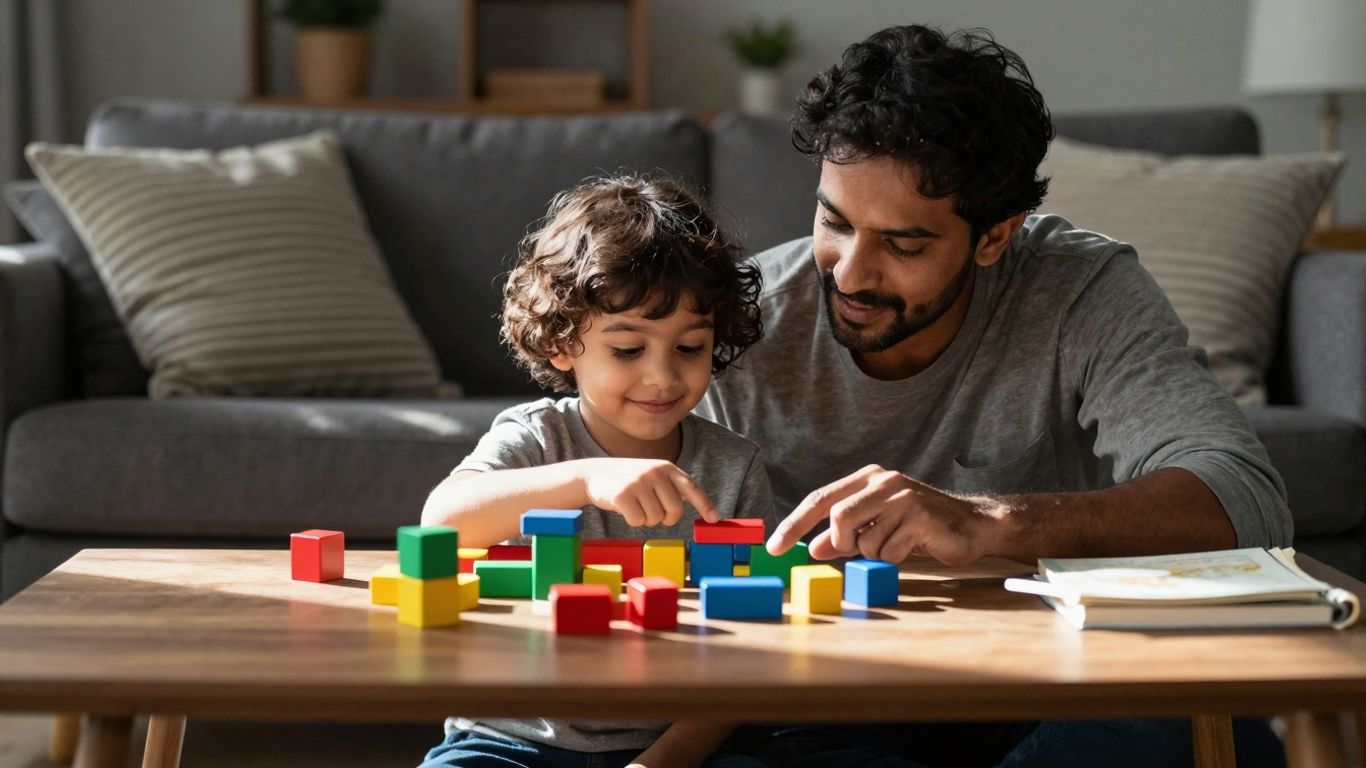
Think about it: when you feel comfortable and safe, you’re way more likely to try new things, right? The same goes for kids, especially when they’re working on something as big as talking. Making your home a place where your child feels good about trying to communicate is a huge part of helping them grow their speech skills. It’s not just about the specific exercises, but the whole vibe you create.
We all get easily sidetracked these days, and kids are no different. When it’s time to work on speech, even for a few minutes, try to find a spot that’s relatively quiet. Turn off the TV, put away the tablets, and focus on the interaction. This doesn’t mean you need a soundproof room; just a little effort to cut down on the noise and visual clutter can make a big difference in helping your child concentrate on what you’re saying and what they’re trying to say back. It shows them that this time is important.
This is where the magic really happens. Every little bit of effort your child makes to communicate, whether it’s a sound, a gesture, or a word that’s not quite perfect, deserves a nod. Celebrate the attempt, not just the perfect outcome. Instead of just saying "good job," try to be more specific. "Wow, you really tried hard to say that word!" or "I love how you pointed to show me what you wanted." This kind of positive feedback makes them feel seen and encourages them to keep trying, even when it’s tough. It builds their confidence brick by brick.
Kids learn best when they’re interested in what they’re doing. If your child is obsessed with dinosaurs, trucks, or princesses, use that! Instead of forcing them to talk about something they don’t care about, weave speech practice into their favorite things. You can make up stories about dinosaurs, describe the trucks going by, or have a tea party with dolls. When you talk about what they love, they’re naturally more engaged and motivated to use their words. It makes practice feel less like work and more like play.
Creating a home environment that feels safe, encouraging, and interesting is key. It’s about making communication a positive experience, so your child feels motivated to explore and use their voice more and more each day. Small, consistent efforts in a supportive space can lead to significant progress.
So, we’ve talked about a bunch of ways to help your child with their talking right at home. It’s not about being a perfect speech therapist, really. It’s more about just making talking a normal, fun part of your day. Reading together, chatting during dinner, even just playing games, these are all chances to help them find their voice. Remember, every little bit counts, and your support makes a huge difference. Keep at it, and you’ll see your child grow more confident in expressing themselves.
Turn everyday moments into speech practice! Use meal times, bath times, and even chores as chances to talk. Reading stories together is fantastic for building words and understanding. Playing games, especially ones where you have to guess or act things out, can also be super helpful. The key is to keep it light and enjoyable, not like a chore.
Reading aloud is a winner! Books expose kids to tons of new words. You can also use flashcards with pictures and words, or even simple communication apps that show images. When you’re talking, try to use new words yourself and explain what they mean in simple terms. Pointing out things and naming them is great too.
Find a quiet spot for practice, away from TVs or noisy toys. Keep practice sessions short and engaging. Sometimes, making it a game or using a child’s favorite toy can help them stay focused. It’s also important to be patient and not get frustrated if they lose focus; gently guide them back.
Consistency is more important than long sessions. Aim for short, regular practice times, maybe 15-20 minutes a day, spread out. Integrating little bits of practice into daily routines, like talking during meals or while playing, works wonders. It’s about making it a natural part of your day.
Create a safe and encouraging space where they feel comfortable trying. Celebrate every effort they make to communicate, even if it’s a gesture or a sound. You can model clear speech yourself by speaking a little slower and clearly. Asking open-ended questions that encourage more than a ‘yes’ or ‘no’ answer can also help them open up.
If you have concerns about your child’s speech or language development, such as not meeting typical milestones, having trouble being understood, or seeming frustrated when communicating, it’s a good idea to talk to a speech-language pathologist. They can assess your child and provide personalized guidance and strategies.